
If it’s time to upgrade your water heater, you may be trying to decide between all your different options. Should you get a traditional tank water heater, and if so, should it be a heat pump model? Or should you go with a tankless water heater?
Keep reading to learn everything you need to know about the various types of water heaters in Rochester, NY so you can decide which one is right for your family. If you have further questions, just give us a call and we are happy to help. We can talk to you about the options in greater detail and offer an in-home assessment where we review how each option would work for you.
How do you maintain a tankless water heater?
- Flush and descale the system once a year to remove mineral buildup and protect the heat exchanger.
- Clean the water inlet filter regularly to maintain proper water flow.
- Check for leaks, corrosion, or loose connections around valves and fittings.
- Inspect air intake and exhaust vents to ensure safe operation.
- Schedule annual professional maintenance to test components and maintain efficiency.
Tank Water Heaters Explained: Costs, Pros, and Best Uses
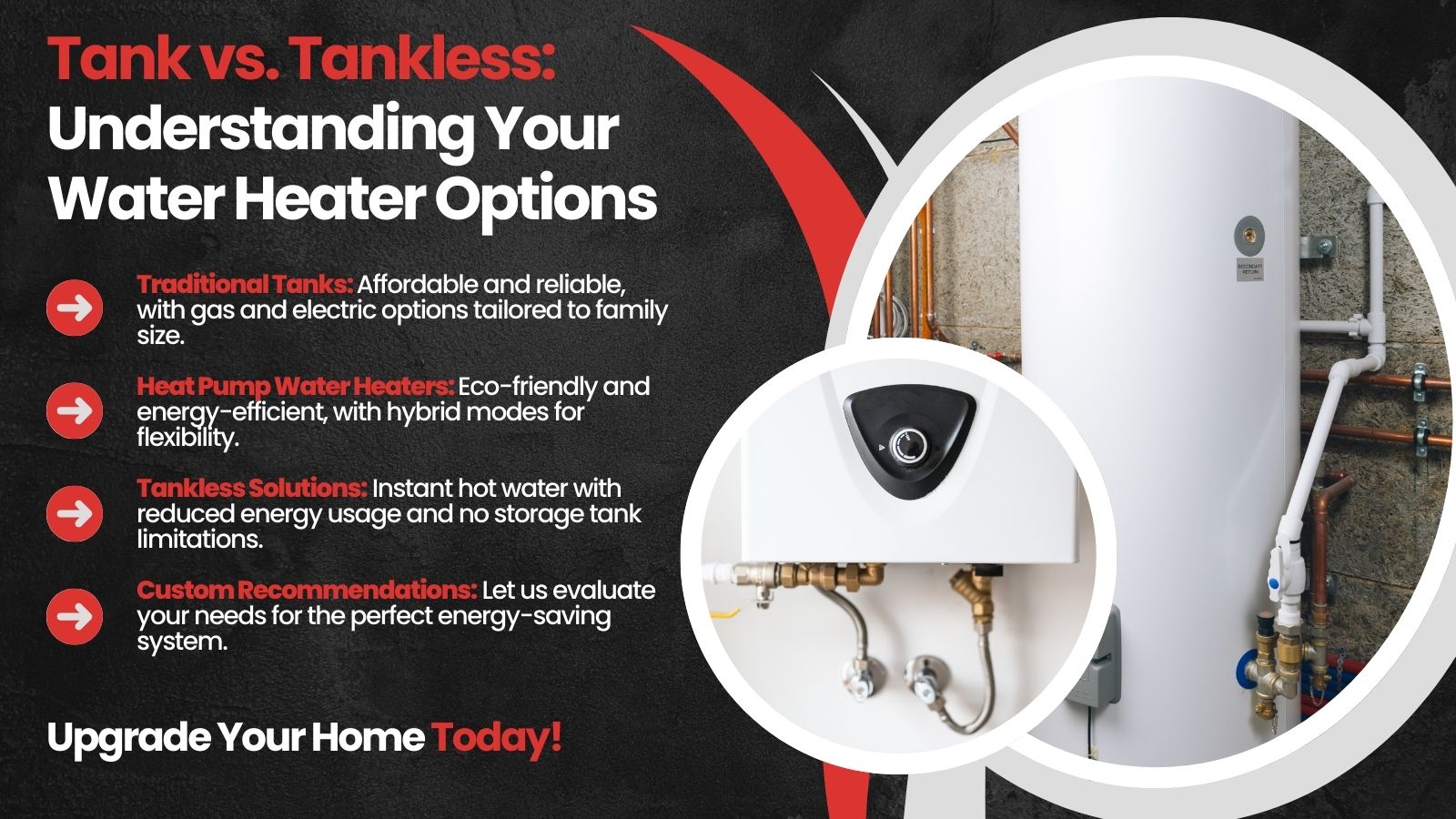
A tank water heater comes in three different options: gas powered, electric, or heat pump operation. When it comes to tank water heaters, these options are all very similar when it comes down to the end result. What matters most is selecting a tank storage size that best fits your family needs. If you have a smaller family, you can probably go with a smaller tank. If you have a bigger family, you need to invest in a tank that holds more water at a time.
A gas powered water heater will heat up water more quickly, which may reduce the turnaround time between the tank filling up and getting hot again in between uses. Having a gas water heater may also lower your energy costs for operation since gas can heat up so quickly compared to electric.
If you don’t have the availability of a gas service in your area, an electric water heater may be the better choice. Although they heat up more slowly, they can also require less maintenance over the years compared to gas water heaters. This may make owning one a little easier when it comes to care.
A heat pump water heater works in much the same way that a HVAC system works as a heat pump. Heat gets absorbed from outside of the tank and transferred into the water. The downside to this kind of operation is that when temperatures are very cold outside, your heat pump water heater may not heat water as thoroughly or as quickly as you would like.
The good news is that most heat pump water heaters have the option to turn hybrid mode on or off. If you turn hybrid on, it will work as a heat pump when it is able to. When it doesn’t heat up as quickly, you can turn hybrid off so that it is operating as an electric water heater and using a heating element to heat up the water.
This can increase your energy costs for using the water heater compared to using it in heat pump mode. However, you won’t have to wait as long for hot water or worry about your water not being as hot as you would like. Plus you can use the water heater that way only when you need it most to save on energy costs the rest of the year.
Tankless Water Heaters: Efficiency, Lifespan, and Installation Considerations
When it comes to having a tankless water heater, all of the above things about gas, electric, and heat pump water haters are also true about tankless models. The key difference in having a tankless model is that water gets heated on demand instead of heating up a tank of water and having it ready at any time for use.
This is another way to reduce energy costs because instead of having water that is hot around the clock, even when you don’t need it, your tankless water heater will only warm up water when you are actively using it. One of the biggest reasons people invest in a tankless water heater is because you have a nearly unlimited supply of hot water.
There’s no waiting for a tank to refill in between uses. You can take longer showers, take multiple showers in a row amongst your household, and do things like washing dishes and washing clothes using hot water without worrying about running out.
Frequently Asked Questions
Question: What is the main difference between tank, tankless, and heat pump water heaters?
Answer: Tank water heaters store and continuously heat a set amount of water. Tankless systems heat water only when needed, without storage. Heat pump water heaters use heat from surrounding air to warm stored water, improving efficiency. Each option differs in energy use, installation needs, and performance.
Question: Why might someone choose a tankless water heater?
Answer: Homeowners often choose tankless water heaters because they deliver hot water on demand, reduce standby energy loss, and take up less space. They can support longer usage without running out of hot water, though installation costs and electrical or gas upgrades may be higher.
Question: What are the benefits of a heat pump water heater?
Answer: Heat pump water heaters are known for high energy efficiency because they move heat from the surrounding air instead of generating it directly. This can significantly lower operating costs and environmental impact, especially in warm or moderate climates with adequate installation space.
Question: How does a traditional tank water heater compare to other types?
Answer: Traditional tank water heaters are typically more affordable upfront and simpler to install. They provide consistent hot water until the tank empties, but they use more energy by keeping water heated at all times, which can increase long term utility costs.
Question: Which water heater type is the most energy efficient?
Answer: Heat pump water heaters are generally the most energy efficient option because they rely on heat transfer rather than direct heating. Tankless systems are also efficient by avoiding stored hot water losses, while traditional tank models tend to consume more energy overall.
If you need help with heating services in Brighton, NY, contact Triple-O Heating Cooling Electric & Plumbing today! Schedule service with Triple-O Mechanical: Your One-stop Shop for HVAC, Plumbing, and Electrical.